

Across India’s small towns and growing cities, daily commuters are rethinking how they travel. Rising petrol prices, crowded buses, and increasing auto fares are pushing people toward more affordable and practical mobility options. In this changing landscape, the Patanjali Electric Cycle enters as a strong utility-focused solution aimed at students, shop workers, delivery riders, and low-income earners who need dependable daily transport without high operating costs.
Unlike premium electric scooters that can still be expensive to buy and maintain, the Patanjali Electric Cycle is positioned as an ultra-budget mobility alternative. It focuses on pedal-assist efficiency, removable battery convenience, and extremely low per-kilometre travel costs. For people who ride 10–25 km daily for work or study, this kind of micro-mobility solution makes practical financial sense.
The idea behind the Patanjali Electric Cycle is simple: reduce dependency on petrol and public transport while offering an easy-to-use, lightweight electric assist platform. With electric utility cycles gaining popularity in tier-2 and tier-3 cities, this model targets riders who value affordability and functionality over flashy features.
Let’s explore the details in a structured and easy-to-understand way.
Frame Design and Utility Ride Practicality
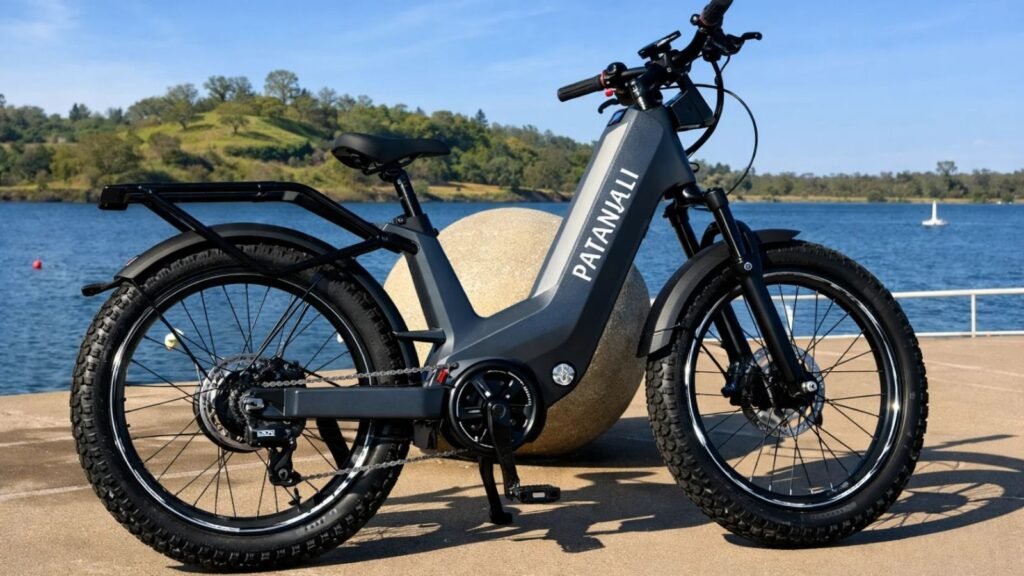
The foundation of the Patanjali Electric Cycle is its lightweight commuter-friendly frame. Designed for daily riding, it balances durability with ease of handling. The frame geometry promotes an upright riding posture, which reduces strain on the back and shoulders during long commutes. This upright design also improves road visibility—an important factor in busy Indian traffic conditions.
One of the practical strengths of the Patanjali Electric Cycle is its utility-focused layout. Many riders in this segment carry school bags, office backpacks, grocery items, or small delivery packages. To address this, the cycle includes a rear utility carrier that supports light goods carrying. This makes it suitable not only for personal commuting but also for small business or delivery usage.
The overall weight of the Patanjali Electric Cycle typically stays in the 20–24 kg category. This weight range ensures that even if the battery assist is turned off, the cycle can still be pedaled manually without excessive effort. For users who may occasionally run out of charge or prefer manual riding for short distances, this is an important advantage.
Traffic maneuverability is another strong point. Narrow lanes, congested markets, and tight parking spaces are common in Indian towns. The compact dimensions and lightweight structure of the Patanjali Electric Cycle make it easy to navigate such areas.
Battery Pack and Assist Riding Range Performance
One of the most important features for buyers in this segment is range. The Patanjali Electric Cycle offers a claimed assist riding range of up to 135 km under ideal conditions. This figure is based on pedal-assist efficiency rather than full throttle operation.
In real-world mixed usage conditions, riders can expect a range of around 100–120 km depending on factors such as:
- Rider weight
- Terrain slope
- Road condition
- Assist mode usage
- Wind resistance
For daily commuters covering 10–20 km per day, this means charging only once every few days. That level of convenience makes the Patanjali Electric Cycle highly practical for students and working individuals.
The lithium battery system used in the Patanjali Electric Cycle is designed for efficiency and durability. Charging time typically stays within 3–4 hours using a standard home power socket. There is no need for special charging infrastructure, which keeps ownership simple and accessible.
In terms of cost efficiency, this setup drastically reduces transportation expenses compared to petrol-powered two-wheelers.
Motor Power and Speed Capability
The Patanjali Electric Cycle uses a 250W class electric motor, which is common in pedal-assist electric cycles designed for urban commuting. This motor output is sufficient to provide smooth acceleration and steady support while pedaling.
The assisted top speed generally stays within the 25–35 km/h range, depending on configuration and assist level. This speed category is ideal for city riding, short highway stretches, and local commuting.
Torque delivery in the Patanjali Electric Cycle is tuned for smooth pickup rather than aggressive acceleration. This makes it beginner-friendly and suitable for riders who may not have prior experience with electric mobility.
During mild slope climbs or flyovers, the motor assistance reduces physical strain significantly. Riders can maintain a steady pace without excessive effort, especially when using higher assist levels.
Overall, the motor and speed configuration of the Patanjali Electric Cycle aligns well with its target audience—practical commuters rather than performance enthusiasts.
Removable Battery and Charging Convenience
A major convenience feature of the Patanjali Electric Cycle is its removable battery system. Instead of carrying the entire cycle indoors for charging, users can detach the battery pack and charge it separately at home or office.
This is especially useful for apartment residents or students staying in hostels where parking areas may not have charging points. The removable design makes the Patanjali Electric Cycle more flexible for urban lifestyles.
The battery system includes a built-in Battery Management System (BMS) that protects against:
- Overcharging
- Deep discharge
- Short circuits
- Overheating
Battery health monitoring ensures optimized charging cycles, which helps extend overall battery lifespan. This is crucial because battery replacement is one of the biggest long-term costs in electric mobility.
By offering this level of convenience, the Patanjali Electric Cycle addresses one of the key concerns of first-time electric vehicle buyers.
Booking Amount and Price Segment Reality
Affordability is one of the strongest selling points of the Patanjali Electric Cycle. Early booking options reportedly start with a reservation amount of ₹3,999. This makes entry into electric mobility financially accessible for a wide range of buyers.
The expected full price range of the Patanjali Electric Cycle typically falls between ₹22,000 and ₹38,000 depending on battery size and configuration. Even at the higher end of this range, it remains significantly more affordable than most electric scooters.
Running costs are extremely low. On average, per-kilometre travel cost is estimated to be between ₹0.05 and ₹0.12 depending on electricity tariffs. Compared to petrol vehicles, this represents massive savings over time.
For delivery riders or shop workers covering 20–30 km daily, the Patanjali Electric Cycle could recover its purchase cost relatively quickly through fuel savings alone.
Daily Commuter Suitability
The Patanjali Electric Cycle is particularly suitable for:
- College students
- Tuition-going school students
- Grocery and milk delivery riders
- Small shop employees
- Office workers in small towns
- Budget-conscious daily commuters
For short-to-medium daily distances, the cycle provides enough speed and comfort without requiring registration, insurance complexities, or fuel expenses in many regions (depending on classification).
The lightweight nature of the Patanjali Electric Cycle also makes it easier for female riders and elderly users compared to heavier electric scooters.
Low Maintenance and Long-Term Ownership Benefits
Maintenance requirements for the Patanjali Electric Cycle are generally lower than petrol-powered two-wheelers. There is no engine oil, no clutch, and no fuel system maintenance.
Regular maintenance mainly involves:
- Brake adjustments
- Tire pressure checks
- Chain lubrication
- Battery care
This simplicity reduces long-term ownership costs. For low-income earners, predictable and minimal maintenance is a major advantage.
The Patanjali Electric Cycle therefore appeals strongly to practical buyers who prioritize savings and reliability.
Environmental and Social Impact
Beyond individual cost savings, the Patanjali Electric Cycle contributes to reducing urban air pollution. With zero tailpipe emissions, it supports cleaner city environments.
In small towns where public transport options may be limited, such mobility solutions improve access to education and employment. Affordable electric cycles can increase independence for students and workers.
The rise of models like the Patanjali Electric Cycle reflects a broader shift toward sustainable micro-mobility in India.
Market Positioning in Growing Micro-Mobility Segment
India’s micro-mobility segment is expanding rapidly. Electric cycles are emerging as practical daily transport tools rather than recreational gadgets.
The Patanjali Electric Cycle is positioned as a value-first product in this category. Instead of focusing on premium features or aggressive styling, it emphasizes range, affordability, and utility.
This practical positioning makes it competitive in small-town markets where cost sensitivity is high.
Disclaimer
Final specifications, pricing, assist range, booking structure, and feature lists of the Patanjali Electric Cycle may vary based on official announcements and production configurations. Buyers are advised to verify complete details through authorized dealerships before making purchase decisions.
Final Thoughts – Budget Mobility with Practical Vision
The Patanjali Electric Cycle represents a focused attempt to bring electric mobility within reach of everyday commuters. With its lightweight frame, 250W assist motor, removable battery system, and claimed long riding range, it addresses core daily transportation needs rather than luxury expectations.
For students, small business workers, and delivery riders seeking to reduce travel costs, the Patanjali Electric Cycle offers a financially sensible and environmentally friendly option. Its low running cost and simple charging setup make it especially appealing in smaller towns where infrastructure may still be developing.
As micro-mobility continues to grow in India, practical solutions like the Patanjali Electric Cycle could play an important role in shaping the future of affordable transportation.